Could also pass for the house rules at Josefstrasse.
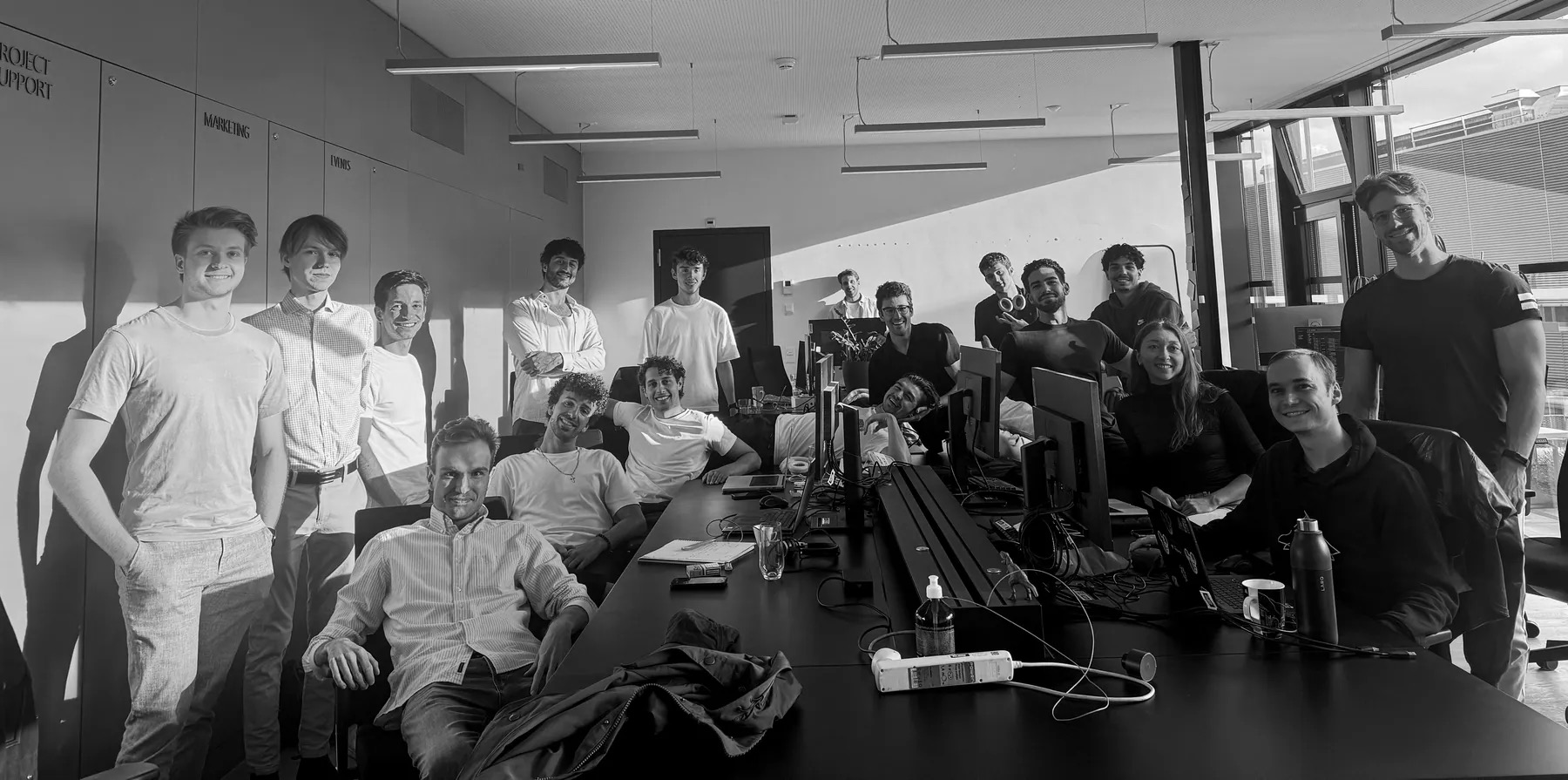
There is something quite peculiar happening right now on the Josefstrasse street in Zurich’s old industrial district. A city owned building which used to be quite empty a few years ago is now seeing a renewed surge of enthusiasm from a panoply of visitors from around the world. The outside brutalist architecture, grey floors, and the old ceiling tiles couldn’t give a more “this place is dead” feeling. And yet the names of its recent visitors are, quite literally, jaw-dropping.
One week it is four founders fresh out of Y Combinator who come in on a Monday to read other people’s applications line by line and give advice on how to get it. Another, it is a team from Nvidia’s startup programme asking to meet whoever is building something. A group of Finnish students, three days into a tour of the city, knock to ask if they can pitch. A runway of investors from top tier funds coming in to say hi. There even is a random guy running an art & music event series off of his living room.
“One of the two places I was told I should visit before I go back to the airport.”
In September, Loubaba El Ayoubi, investor at Northzone based in New York (Northzone is one of Europe’s larger venture firms) on her 12 hours trip to Zurich, was seen meeting with Matteo Pariset, one of the founders of the space. J Floor, she said, was “one of the two places I was told I should visit before I go back to the airport.”
J Floor describes itself as a community for founders. It grew out of a circle of student builders at ETH Zurich, the Swiss Federal Institute of Technology, and takes its name from floor J, where the group worked in 2025 at the university. It opened its own rooms in February after the original space closed its doors. Its website states the ethos of the group clearly: “come to J floor if you are wired to build. No equity, no fees.” Members pay no rent and give up no shares in their companies. The organisation is registered as a non-profit.
According to its website, more than 115 founders now work out of J Floor, on more than 55 projects, and its members have raised more than 60 million between them.
The people who run it are building companies of their own. Pariset runs Protplex, a search engine biologists use to find protein structures. Nikos Kaliorakis, the president, studied at ETH. Jan Wiegner works on small artificial intelligence models and on understanding what happens inside them.
“How far are we from recursive self-improvement?”
In October, J Floor started a reading group on AI systems that design and run their own experiments, opened by Maksym Andriushchenko, a researcher at the ELLIS Institute in Tübingen. The invitation asked, “How far are we from recursive self-improvement?” In March, together with a lab at ETH, it will hold a hackathon called Half-Baked, for side projects that deserve to become companies. Selected teams will receive up to $100,000 in computing power. The best project wins $1 million.
A demonstration in the robotics room at J Floor. Photograph courtesy of J Floor.
The Y Combinator founders who came that Monday were Jan Schnyder of nunu.ai, Gohar Tamrazyan of Pavoot, Imad Eddine Mokadem of Amboras and Paul Beckers of AquaShield, all accepted within the past year. They had come to give feedback to Zurich founders preparing their own applications as they themselves started their ventures from the now burgeoning space.
The interest follows the money now moving through Zurich. In August, Gravis Robotics, a Zurich company that fits construction machines with software so they can dig on their own, raised $200 million from SoftBank. The round valued the company at $1 billion. Four years earlier, Gravis was a project inside a robotics lab at ETH.
That same lab produced ANYbotics, which makes four-legged robots that inspect industrial plants, and RIVR, a wheeled robot dog whose early backers include Jeff Bezos. Elsewhere in the city, Flexion, which writes the software that lets humanoid robots move, has raised $50 million.
By one count, ETH now produces more startup founders than any other university in Europe. Across the continent, robotics companies raised more money in the first half of this year than in the two years before it combined.
“Going from the lab to a company seemed like a natural next step rather than a leap.”
Writing on LinkedIn after the visit, one of the Finnish students said what had stayed with him was “how close research and startups are here.” For the people they met, he wrote, going from the lab to a company “seemed like a natural next step rather than a leap.”
The comparison with Silicon Valley is hard to avoid. It grew around Stanford and the garages and small offices nearby where its graduates met, argued, invested in one another and hired one another. ETH has been in Zurich since 1855. Places like J Floor, where its students can start companies next to people who already have, are much newer.
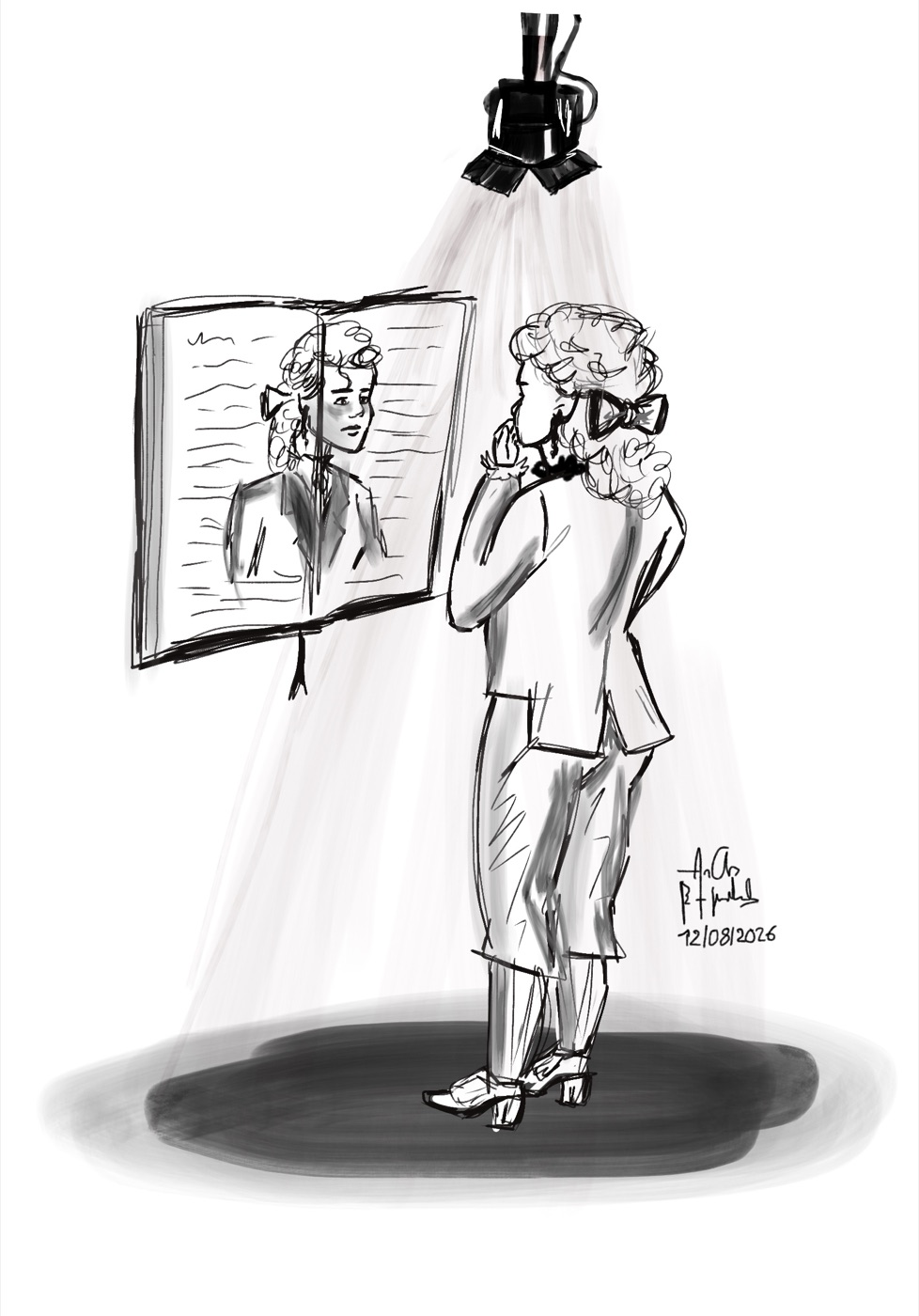
On one wall at Josefstrasse hangs a framed drawing of the space, dated 31 March 2026, a few weeks after the move-in. Its title is “The Past of Something Great.”
“The Past of Something Great,” a drawing of the space dated 31 March 2026, on a wall at J Floor. Photograph by Anas Ben Mejdoub, founder and investor, visiting the space.
We’re at the stage of the future where our species seems to be moving past privacy concern all together for the sake of no longer doing exhausting chores. One company will clean your apartment for free in exchange for the footage. In more than 50 countries, the same trade is now being made by the hour.
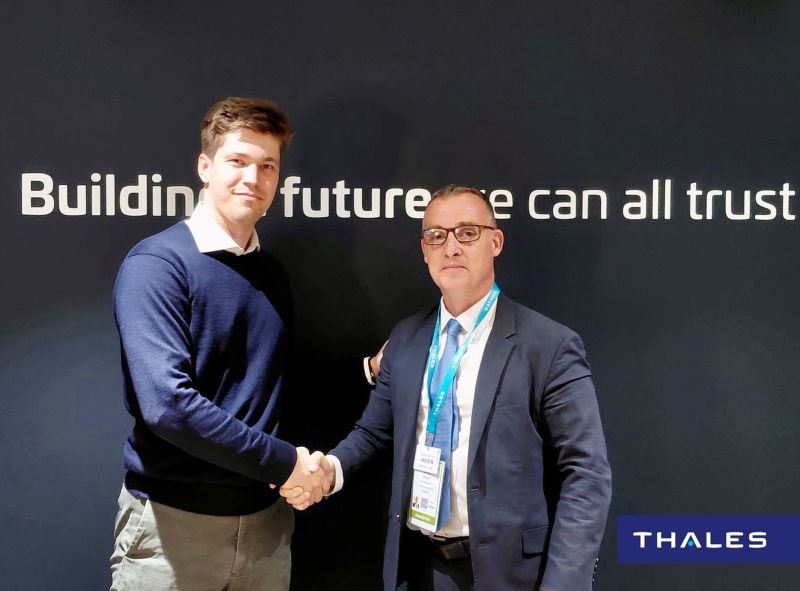
A young German defence-software company, Scipio Networks, has agreed to plug its military-logistics platform into a Thales command system: a Franco-German tie-up aimed at closing the gap between what commanders plan and what their supply lines can actually deliver.
Meet the Church of JADE. She won The X Factor with Little Mix, went solo, and made some of the most technically ambitious pop of the decade. Most people still cannot name a song.
Werber’s cathedral of strings, Auster’s blue notebook, Tesson’s cabin on the Baikal. On the books that put the writing desk inside the frame, and on what it would take to sit down at one.